
Início » Uncategorized (Página 6)
Arquivo da categoria: Uncategorized
XXII Congreso Internacional Jornadas de Educación Histórica. Pensamiento histórico, compromiso cívico y alfabetización digital
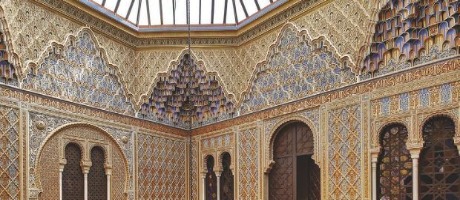
La XXII edición del Congreso Internacional Jornadas de Educaçao Histórica se celebrará en la Universidad de Murcia los días 31 de mayo, 1 y 2 de junio de 2023 y estará organizado por el grupo de investigación DICSO en colaboración con distintas universidades de ámbito internacional. Este Congreso creará un foro de discusión y debate sobre los retos de futuro a los que se enfrenta la enseñanza de la historia.
Para saber mais sobre a inscrição clique na imagem
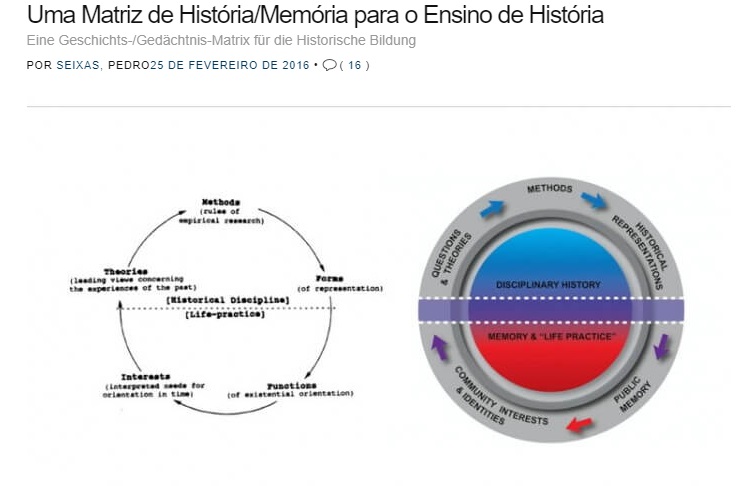
Uma Matriz de História/Memória para o Ensino de História – Peter Seixas
Resumo:
Uma nova matriz? Qual é o papel da educação histórica baseada no Estado em sociedades abertas e democráticas, no que diz respeito às memórias que surgem dos fenômenos coletivos de guerra, opressão, deslocamento, injustiça, trauma, construção da nação ou, na verdade, vida cotidiana? Em que fundamentos se apoiam as intervenções da história escolar? Por que não aceitar simplesmente memórias comunitárias “espontâneas”, mitos familiares, narrativas produzidas comercialmente (por exemplo, cinema de Hollywood) ou outras memórias patrocinadas pelo Estado (por exemplo, comemorações nacionais) que contribuem para a compreensão das pessoas sobre o passado?
DOI: dx.doi.org/10.1515/phw-2016-5370 .
Para ler o artigo completo clique na imagem.
Notícia triste – Falecimento do historiador Peter Seixas
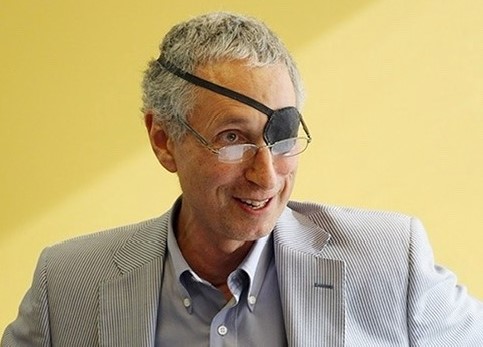
HOMENAGEM A PETER SEIXAS (CARLA PECK)
It is with profound sadness that I share that Dr. Peter Seixas passed away today. A graduate of Swarthmore College (B.A, 1969), Temple University (Teaching Program for College Graduates, 1970), University of British Columbia (MA, 1980), and UCLA (PhD, 1988), Dr. Seixas was a giant in the field of Social Studies education, particularly in the area of history education. His work in historical thinking and historical consciousness transformed the field of history education, and was recognized nationally and internationally. In 2001, he was awarded a prestigious Canada Research Chair and founded the Centre for the Study of Historical Consciousness, which brought together graduate students from the UBC Faculties of Education and Arts, as well as numerous national and international scholars and graduate students, around the nexus of historiography, collective memory and history education. In 2004, he was inducted as a Fellow of the Academy of Humanities and Social Sciences of the Royal Society of Canada and in 2015, he was awarded the National Council for the Social Studies Jean Dresden Grambs Distinguished Career Research Award. These are but a few of the many awards and accolades he received throughout his career in recognition of his transformative contributions to history education and scholarship.
Dr. Seixas conceived of and led a national initiative in Canada called The Historical Thinking Project (HTP). Established in 2006 and built on international scholarship in history education, including Dr. Seixas’ own work, the HTP set out a framework of six historical thinking concepts that are designed to “help students think about how historians transform the past into history and to begin constructing history themselves” (Seixas & Morton, 2013, p. 4). This project, which continued until 2014, transformed the history education landscape in Canada. Across every province and territory, curriculum developers and publishers have drawn on the HTP to reshape Social Studies and History programs of study (curriculum), textbooks, and professional learning opportunities for teachers. A cornerstone of the HTP are the annual Historical Thinking Summer Institutes, which bring together K-12 teachers, museum educators, archivists, historians, and graduate students interested in understanding how to enact a “historical thinking” pedagogy in their work. The institutes continue under the auspices of Thinking Historically for Canada’s Future, a pan-Canadian Social Sciences and Humanities Research Council of Canada (SSHRC) Partnership Grant – a research partnership that includes many of Peter’s former students and colleagues.
Dr. Seixas was a mentor for dozens of graduate students from around the world both through his supervisory work at UBC, through invitations to serve as the External Examiner for comprehensive exams and final doctoral exams, and through the Centre for the Study of Historical Consciousness’ visiting scholar program. Through Dr. Seixas’ curriculum vitae it is possible to trace the genesis of other scholars’ work and influence in the field of social studies education. Dr. Seixas supervised or served on the committees of graduate students who have become or are becoming leaders in their own right including Dr. Alan Sears (UNB), Dr. Avner Segall (Michigan State), Dr. Stéphane Lévesque, Dr. Todd Horton (Nipissing), Dr. Craig Harding (Ambrose), Dr. Kent den Heyer (UAlberta), Dr. Stuart Poyntz (SFU), Dr. Carla Peck (UAlberta), Dr. Viviane Gosselin (Museum of Vancouver), Dr. Lindsay Gibson (UBC), Dr. Heather McGregor (Queen’s), Dr. James Miles (Columbia Teachers College), among many, many others.
It would be difficult to overstate the significant contribution that Peter Seixas’ work made in the field of Social Studies education. His 1996 article, “Conceptualizing the growth of historical understanding” published in the Handbook of Education and Human Development: New Models of Learning, Teaching, and Schooling (David Olson & Nancy Torrance, Eds.) was groundbreaking. He authored and edited several important books, published in major journals in the United States, Europe and Canada, and was an invited keynote speaker at conferences around the world. He also wrote significant applied material for policy makers and practitioners as well as writing and speaking about history education in popular media. He was one of those rare academics who communicated well across academic, professional, and popular contexts. The letters of support collected for his nomination for the Jean Dresden Grambs award contain evidence of the influence of Dr. Seixas’ scholarship. One prominent scholar wrote that “Professor Seixas’ scholarship set the agenda for much of the best research that has taken place since then, and today it would be unthinkable to pursue work in this field without a close familiarity with his writing.” Another wrote, “In short, when it comes to the internationalization of history education, Peter Seixas is without doubt the North American go-to academic.”
Dr. Seixas will also be remembered as “a model of a scholarly life” and “an unfailingly generous colleague and mentor.” I experienced his kindness through everyday exchanges, from the almost daily drives to and from campus (I tell my friends I was the most spoiled grad student in history!), to delighting in delicious chocolate treats, to holiday dinners with his family and friends (among many other examples). This is what I will remember most about Peter. His legacy will live on in his family, his friends, his students, and in his scholarship. In my last email to him, written a week ago, I was able to thank him for the many gifts he shared with me: his brilliant mind, his mentorship, his sense of humour, his caring nature, his patience, his love of chocolate…. I told him that I, and so many others, will not forget him. He was and will remain a giant. May he rest in eternal peace.

 lapeduh - ufpr